Tooth-Colored Fillings
A healthy, beautiful smile starts here

Tooth-Colored Fillings | Dentist
Improve your smile today – call to schedule a consultation!
Claim Now!

Tooth-Colored Fillings

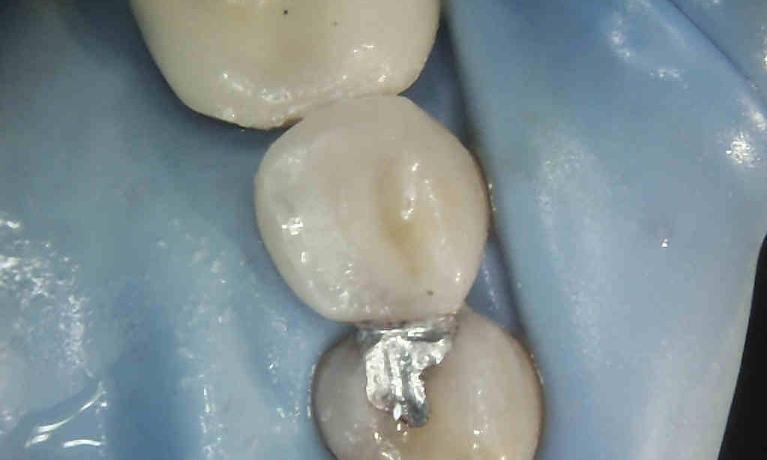
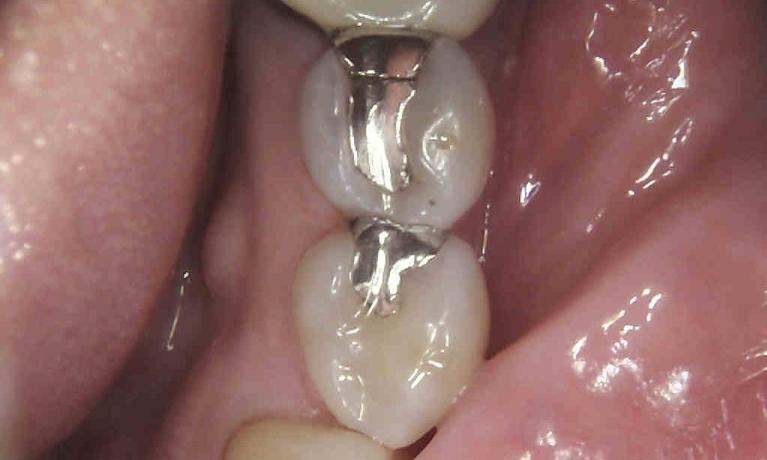
Standard silver amalgam fillings can be unattractive. They are noticeable when you smile and can cause your teeth to appear discolored.

If you need a filling but don’t want it to be visible, tooth-colored composite fillings are appealing alternatives. Composites can also be used for minor reshaping of chipped teeth or to fill small gaps between teeth to give you a more even, appealing smile.

What Is a Composite Filling?

Composite fillings are usually formed using a mixture of resins, fillers, and colorants. They are applied to the tooth in layers and “cured."

Unlike silver amalgam fillings, composites can be made to match the color of your natural teeth, giving you a more seamless-looking filling than amalgam fillings.

Since the composite bonds directly to your tooth, these fillings require less removal of healthy tooth, which leaves the remaining tooth structure more intact and stronger. They are also less susceptible to cracking and chipping due to temperature changes in your mouth than amalgam fillings.

How Is a Composite Filling Placed?

To place a composite filling, the dentist will numb the area if necessary and remove any decay. The remaining tooth is then etched to create a rough surface to bond the composite to. The dentist will match the color of your natural tooth and mix up a composite that is then applied in layers with curing between each layer. Once built up, it will be shaped to contour to your bite and look natural, then polished smooth.

For areas needing larger fillings, a semi-direct or indirect filling may be used. These consist of composite that is either built up inside the mouth and then removed for curing, or a filling that is manufactured outside of the mouth and cured. This allows for stronger curing and a more sturdy composite filling. Once the filling is cured, it is bonded to your natural tooth.

Why Choose Composite?

Composite fillings are usually more expensive than silver amalgam fillings, but they offer a better esthetic than the metal fillings. They can also act more like natural tooth, helping to avoid fractures due to uneven stress when biting.

Contact our office today to make an appointment or if you have any questions or concerns about tooth-colored composite fillings.

Frequently Asked Questions

A rubber dam is a thin sheet of latex that creates a barrier between the working field and the rest of the mouth. We punch holes in it for the teeth to slip through.

This has an incredible number of advantages to the dentist, the dental assistant, and most importantly, the patient. I will review some of these advantages here:

  1. Prevents contamination of the cavity with saliva or blood when bonding your filling. The number one cause of sensitivity after a white filling is contamination during the bonding. Not only does this make your tooth hurt for weeks, but it also decreases the longevity of the filling. Poorly bonded fillings break down at the margins, allowing them to leak. Plus, when this occurs, decay then has an easy path under the filling.
  2. Protects the lips, tongue, and cheek from harm from the drill. The rubber dam retracts and protects lips, cheeks, tongue, and even the gums. 
  3. Retraction of soft tissue for better visibility. This also allows the dentist and assistant to focus more of their attention on your tooth and the procedure. The contrast in color from the rubber dam and the tooth also makes visibility better. Every step in a dental procedure requires a great level of attention to detail; the dam enables this.
  4. Protection of the gum tissue. With the dam in place, we usually place a wedge between the teeth. In combination with the dam, this prevents damage to the gums. It also allows a clean working field. 
  5. Prevents swallowing foreign materials. We use a lot of small tools, which can be dropped. It is very comforting for patient and doctor to have the dam as a safety net.
  6. Keeps bad tastes out. Many dental products we use taste pretty bad, the dam will allow these products to be rinsed without touching any soft tissues. 
  7. Keeps vapor from your breath out of the working field. Not only does this fog up our mirrors, making it hard to see, there is enough water in your breath to contaminate your filling.
  8. Catches amalgam scraps. While it is not as critical to have a dry field for a silver filling, we still use the rubber dam for the above reasons and also to catch any scraps that fall off as we carve your filling. The dam also catches any pieces of fillings or crowns that are removed when drilling. 
  9. Keeps bacteria from saliva out of the tooth during root canals. Root canal is the procedure that has been most associated with rubber dams; in fact, many dentists will only use the rubber dam for this procedure. It is used for good reason, as we use small files and caustic irrigating solutions that we do not want in your mouth.
  10. Allows patients to relax. When first using the rubber dam, I anticipated a lot of negative reaction to it from patients. Surprisingly, the feedback I got was almost completely positive. Many patients found it comforting to have the protection in place and also not have to worry about what to do with their tongue.

Meet Our Doctor:

Brian Burke DMD, PC

Dr. Brian T. Burke is a graduate from Temple University Kornberg School of Dentistry. He continued his training in all facets of dentistry at Christiana Care's General Practice Residency in Wilmington, DE. He received his bachelor's degree in Biology with a Psychology minor at Penn State University. Dr. Burke met his wife, Stephanie, when he was in dental school and they decided to settle down outside of Philadelphia. Shortly after starting a family, they moved to Chester Springs where they are raising their three little girls.

Dr. Burke has been in ...

Getting an appointment is fast and easy!
Get Started!